

Professional Wool Carpet Cleaning or Home Cleaning?
Wool rugs are among the most prized and most enduring pieces in any home. Whether a hand-woven Turkish kilim, a Persian carpet, or a contemporary machine-made wool rug, these pieces deserve a care approach that matches their value.
The question wool rug owners ask most frequently is this: can I wash it at home, or does it need to go to a professional? There is no single answer that applies to every rug — but asking the right questions leads to the right decision for your own. In this guide, we cover the structure of wool fibre, the real risks of home washing, when professional cleaning becomes non-negotiable, and what professional care actually does for your rug.
Understanding Wool Fibre: The Foundation of Every Care Decision
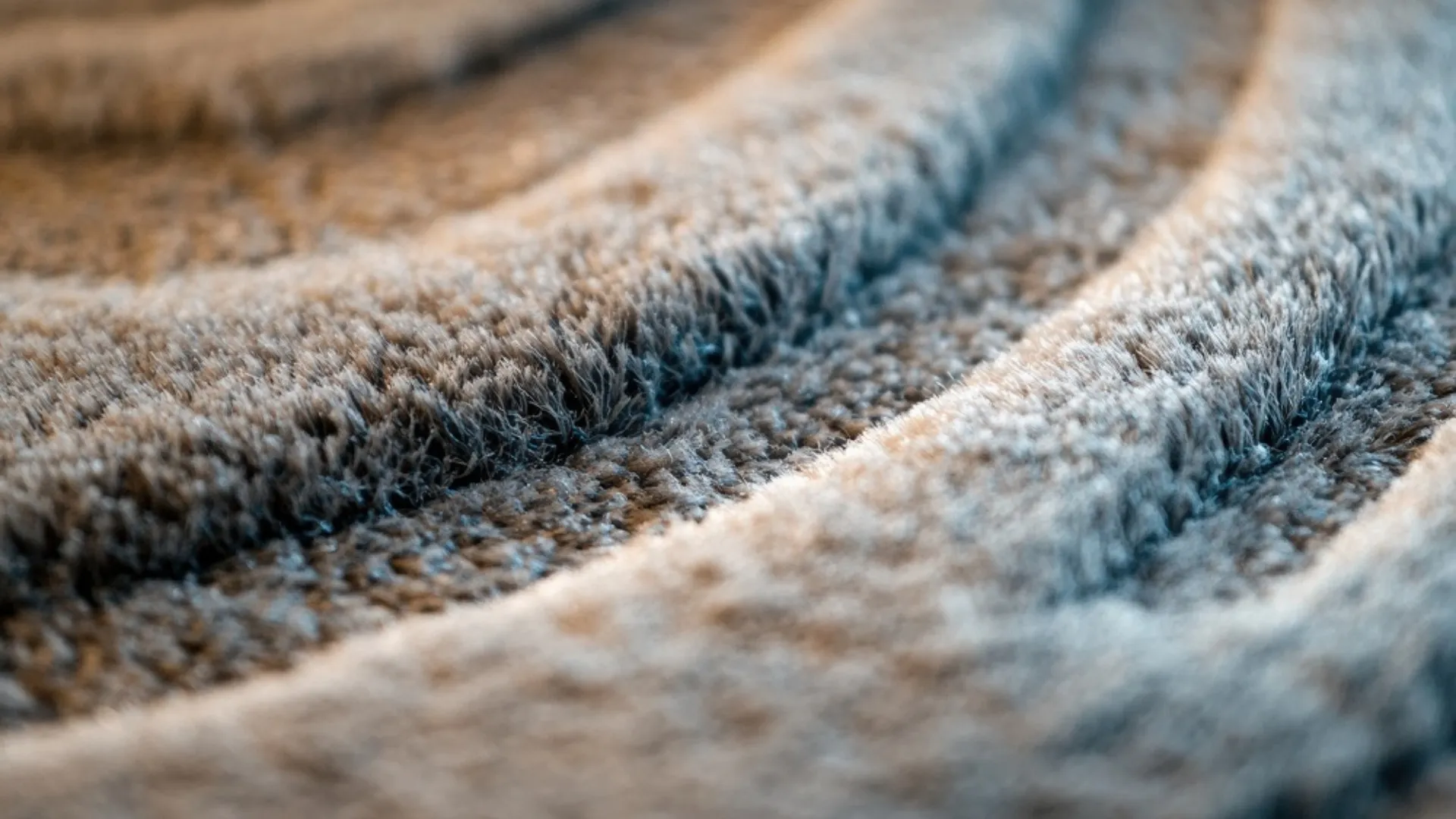
Several properties set wool apart from synthetic rug materials. Understanding these is the first step toward making the right care decision.
Natural oil content: Wool fibre naturally contains lanolin. This oil gives the fibre its elasticity and mild water resistance. Incorrect detergent or high temperature destroys this oil — the fibre dries out, stiffens, and becomes brittle over time.
Moisture absorption: Wool can absorb up to thirty percent of its own weight in moisture — and retain it while feeling dry to the touch. This property makes wool a comfortable and naturally regulating floor material, but it also means that insufficient drying after washing leaves moisture trapped inside the rug, creating the conditions for mould.
Fibre sensitivity: Wool fibres are sensitive to both heat and mechanical agitation. High temperatures cause the fibres to lock together and the rug to shrink. Aggressive scrubbing or high-pressure washing disrupts the fibre structure and dulls the rug's surface.
Dye sensitivity: Natural dyes used in hand-woven wool rugs can be sensitive to water and detergent chemicals. Incorrect washing causes colour bleeding and the formation of permanent marks.
Wool Rug Types and Their Care Requirements
Not every wool rug requires the same approach. The type of rug directly influences the washing decision.
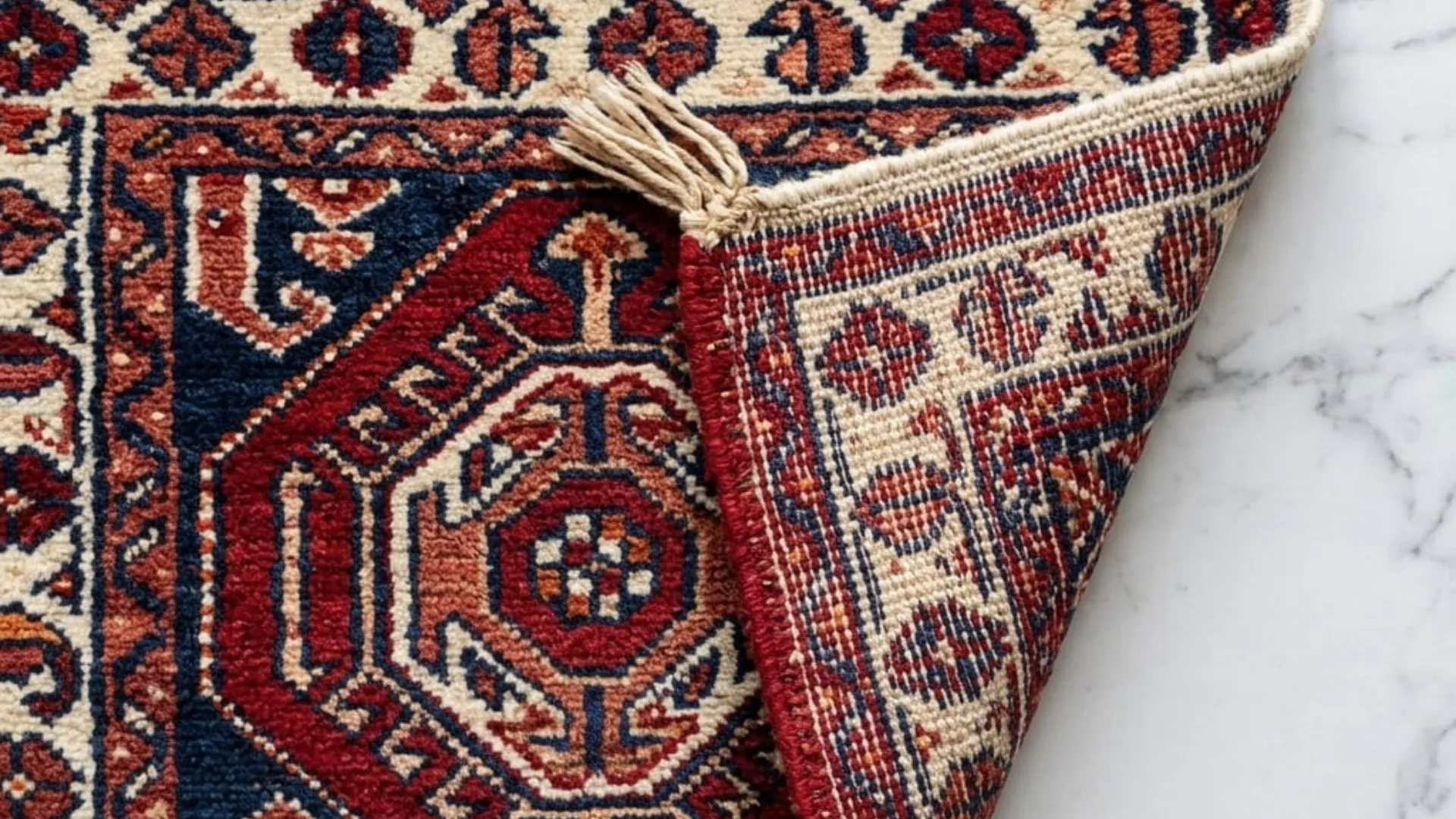
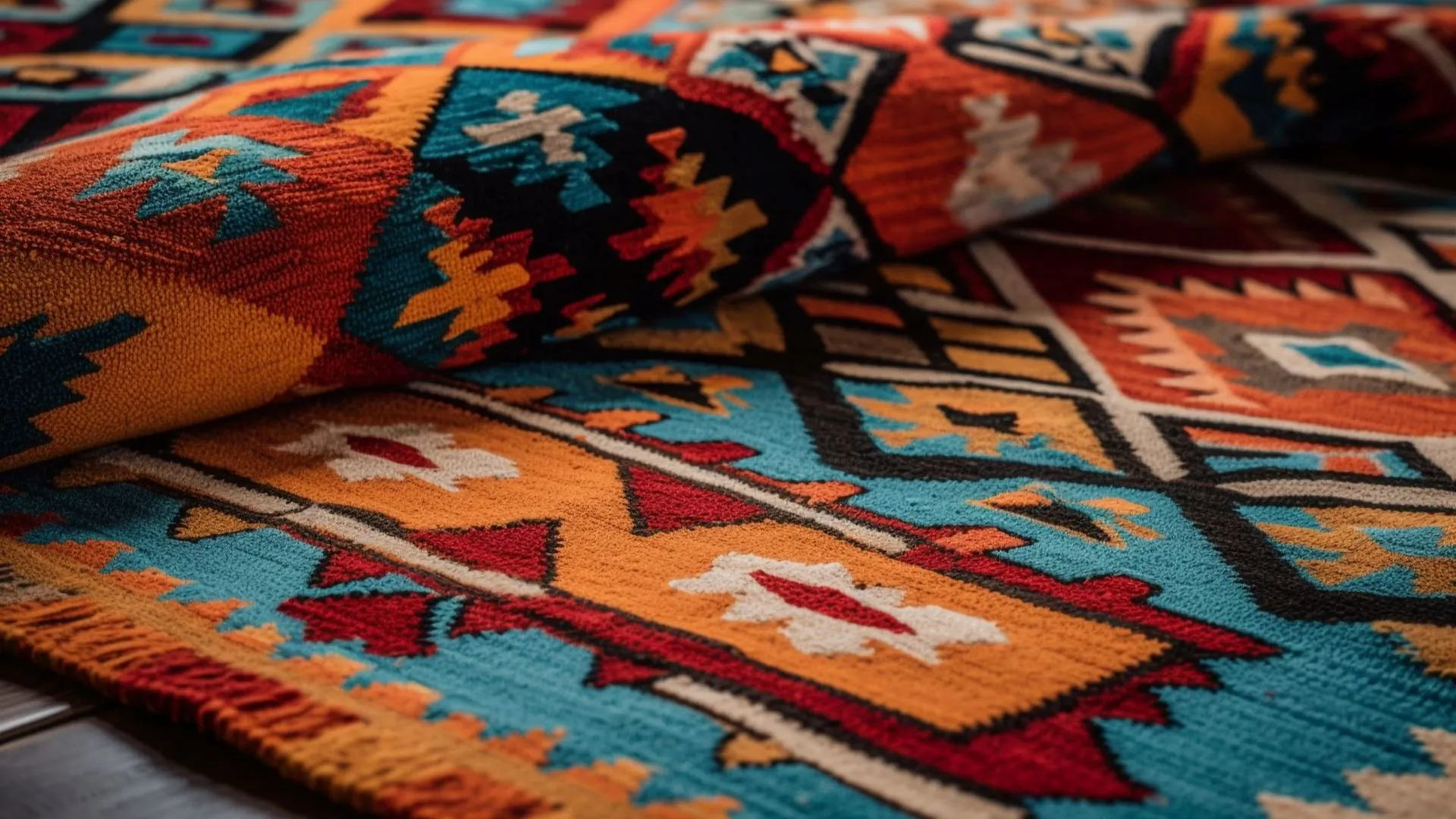
Hand-woven wool rugs: Turkish, Persian, Afghan, and other traditional hand-woven rugs are significantly more sensitive than machine-made alternatives. The natural dyes and traditional weaving techniques used in these rugs are generally not suited to home washing. Professional cleaning is required for the vast majority of hand-woven pieces.
Machine-made wool rugs: Modern machine-made rugs have a more standardised construction. Smaller models may tolerate careful home washing; however, larger and densely woven models should go to a professional.
Kilims and flat-weave rugs: These pile-free rugs are structurally more robust. Smaller kilims can be washed at home; larger pieces are better served by professional cleaning.
Wool-silk blend rugs: Rugs containing silk must never be washed at home under any circumstances. Silk fibre is highly sensitive to water and the risk of permanent damage is very high.
Antique and collector rugs: Any rug over ten years old or carrying collector value must always go to a professional. Attempting home washing on these pieces risks irreversible damage.
The Risks of Home Washing: More Complex Than It Looks
Washing a wool rug at home can seem appealing — practical and economical. But mistakes in this process frequently produce permanent consequences.
Shrinkage and shape distortion: Wool fibres lock together under heat and mechanical agitation. A home washing machine or vigorous hand scrubbing can cause the rug to shrink and its shape to distort permanently. The corners of a rectangular rug wave, the edges curl, and the rug never returns to its original form.
Colour bleeding: The natural dyes used in hand-woven rugs can bleed when they come into contact with water and detergent. Red and dark colours bleeding onto lighter ground areas creates both a visual and a permanent problem. Even machine-made rugs can lose colour with the wrong detergent.
Insufficient drying and mould: Drying a large wool rug fully and evenly in a home environment is extremely difficult. The lower layers and densely woven areas remain damp; within weeks, this residual moisture creates the conditions for mould and bacterial growth. Once a musty odour has set into a rug, it is very difficult to remove entirely.
Fibre damage: Standard laundry detergents are too alkaline for wool. They strip the lanolin from the fibre — and without lanolin, the fibre dries out, loses its sheen, and becomes brittle over time. This process is irreversible.
The effects of aggressive scrubbing: Scrubbing a wool rug hard in an attempt to remove stains disrupts the fibre structure. The surface piles, the pile becomes irregular, and the rug's original texture is permanently altered.
Compression and pressure marks: Laying a wet wool rug flat to dry on a surface causes the lower layers to compress under the weight of the water-laden fibres. This leaves permanent marks and surface irregularities. Large rugs should not be washed at home for this reason alone.
If You Do Wash at Home: Everything You Need to Know
For small, machine-made wool rugs with a care label that permits home washing, careful home cleaning is possible. But every step must be followed without exception.
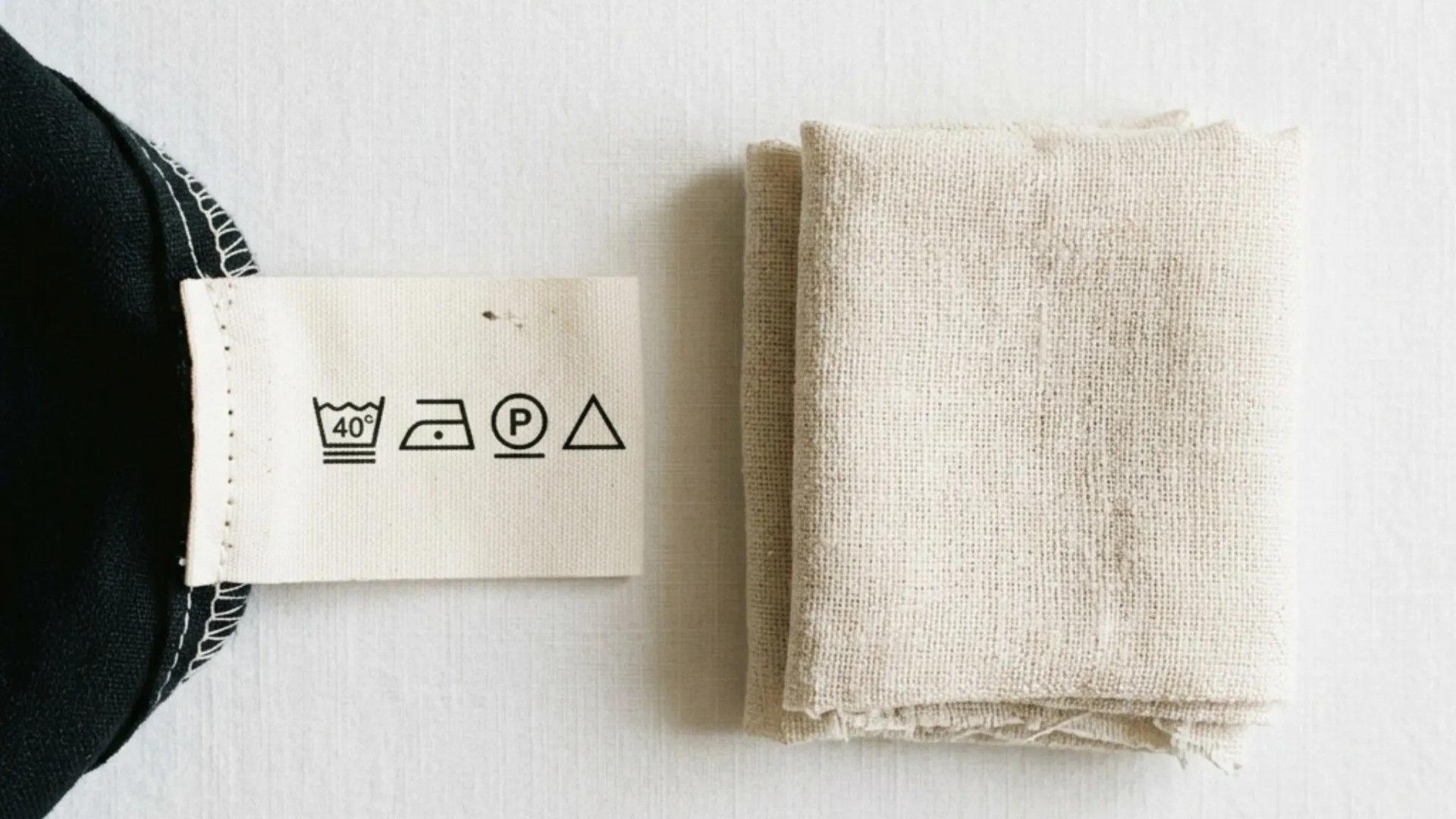
Test first: On a hidden corner of the rug — the folded edge or an underside section — test with a damp cloth. If any colour transfers or fibre distortion occurs, do not proceed with home washing.
Choose the right detergent: Use a detergent specifically formulated for wool — neutral pH, marketed as "wool wash" or "delicate wool shampoo." Standard laundry detergent, washing-up liquid, and multipurpose cleaners must never be used on wool.
Use cold water: Wool rugs should only be washed in cold or cool water. Water temperatures above 30 degrees meaningfully increase the risk of shrinkage.
Gentle, single-direction strokes: When washing, work in the direction of the pile using gentle, single-direction movements. Circular scrubbing and aggressive brushing damage the fibre structure.
Rinse thoroughly: Detergent residue left in the rug will irritate the fibres over time. Rinse several times with clean water to ensure all detergent is fully removed.
Drying is the most critical stage: The rug should be laid flat on a clean surface in a shaded, well-ventilated area. Direct sunlight fades the colour; a tumble dryer causes shrinkage. Turn the rug several times during drying to ensure both surfaces dry evenly. Large rugs cannot be dried fully at home — home washing is not recommended for large-format rugs for this reason.
When Professional Cleaning Is Non-Negotiable
If any of the following conditions apply, home washing should not be attempted — professional care is the only appropriate option.
If the rug is hand-woven or antique, professional cleaning is non-negotiable. The value and sensitivity of these pieces means the risks of home washing can never be justified.
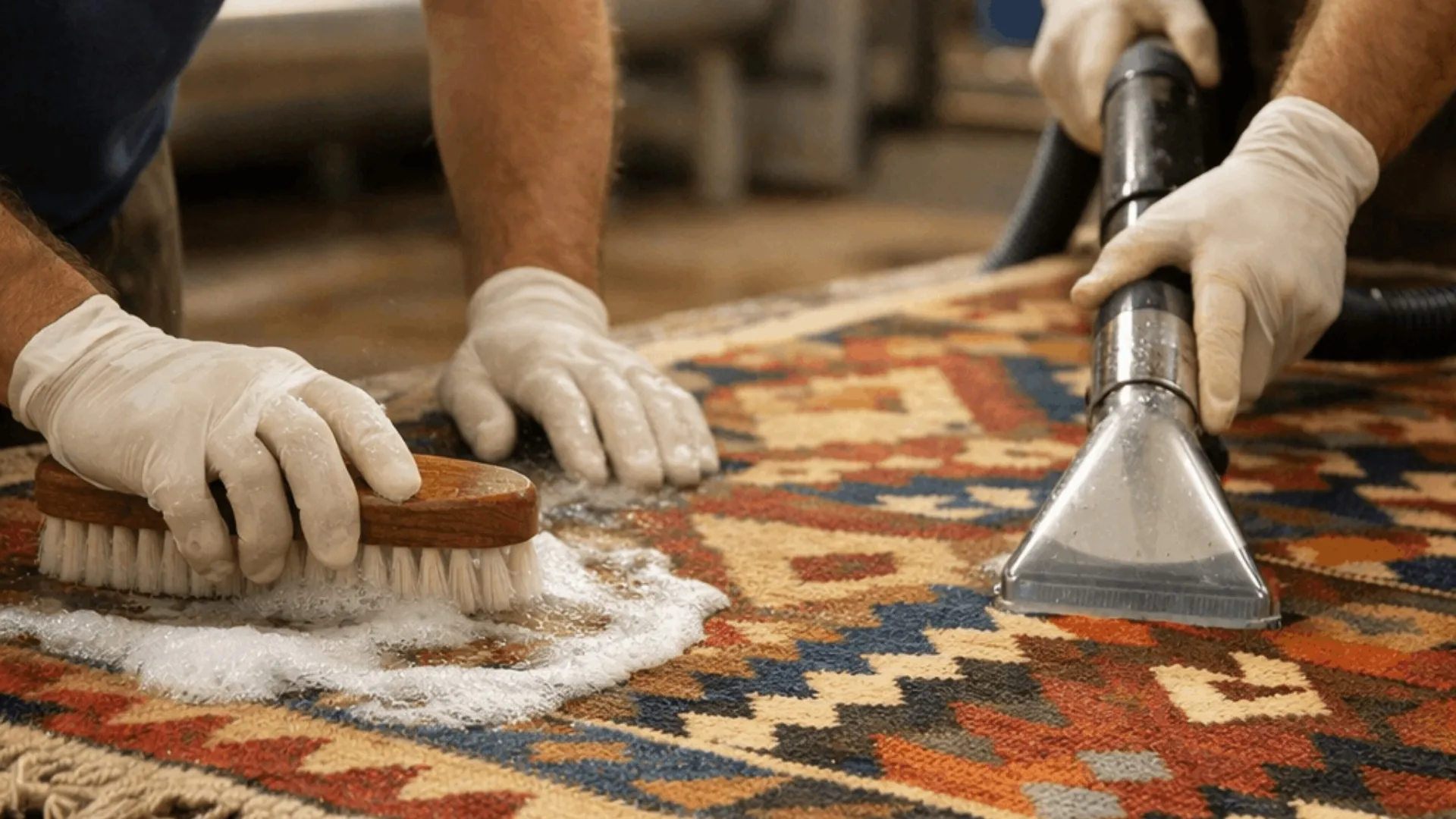
If the rug has deep or widespread soiling — particularly oil-based, ground-in dirt, or organic matter — home washing will not remove it fully. Professional washing equipment reaches deep into the pile and extracts soiling that home methods cannot access.
If the rug is large — 3x4 metres or above — correct washing and full drying are simply not achievable at home. A half-dried rug is a mould risk.
If any colour bleeding was detected during the pre-wash test, home washing will make colour bleeding uncontrollable. In a professional environment, colour-fixing treatment can be applied before the wash begins.
If the rug has a mould problem or persistent odour, home washing will not resolve these issues and may worsen them by adding further moisture. Professional deep cleaning and disinfection are required.
The Advantages of Professional Wool Rug Washing
Professional rug washing does more than deliver a deeper clean. Every stage of the process is designed to protect the rug's condition, appearance, and lifespan.
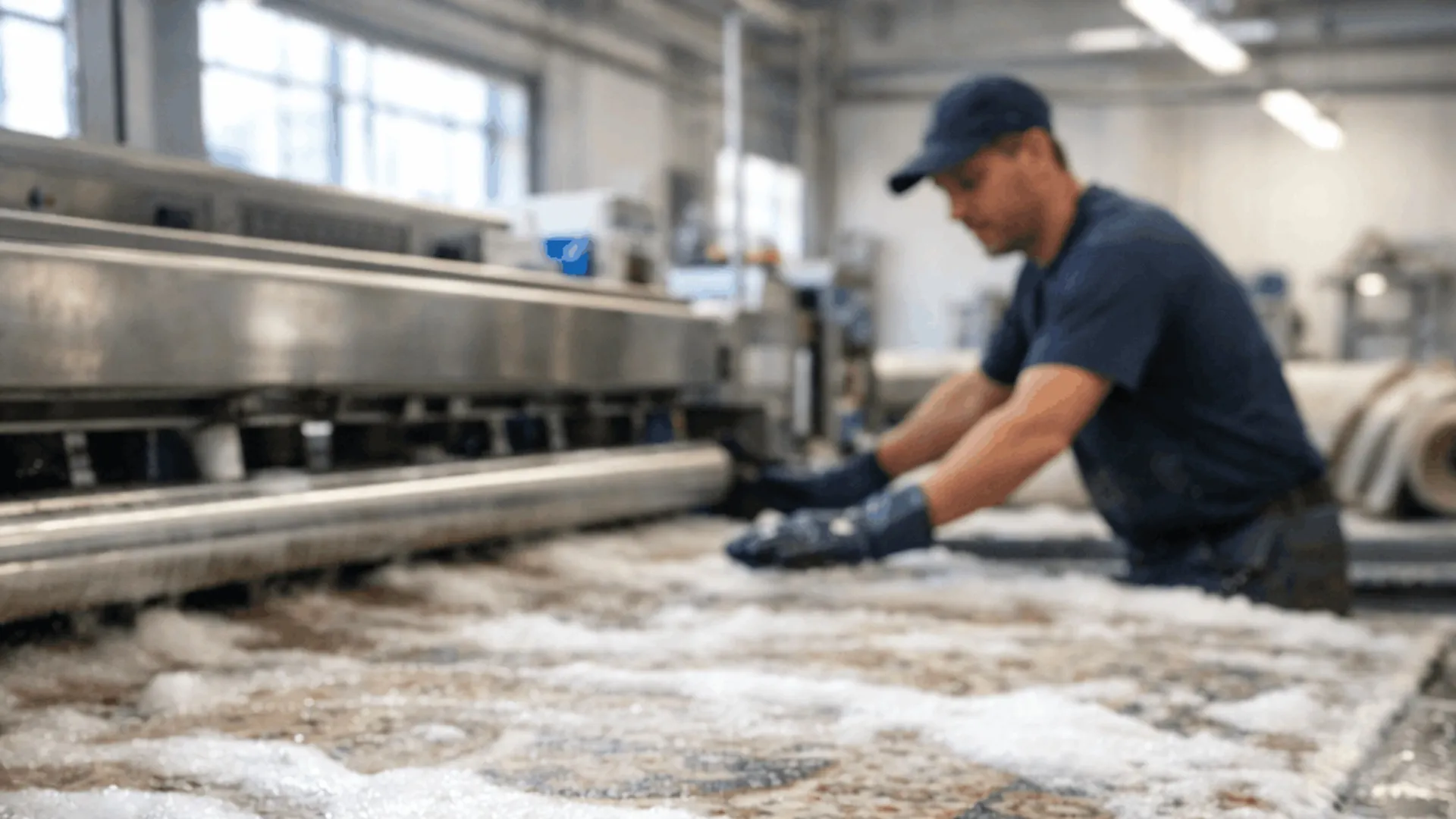
Specialist equipment and technique: Professional rug washing facilities use equipment that can be adjusted for the fibre type and construction of each rug — pressure, temperature, and cycle are all calibrated accordingly. This equipment does not exist in a home environment and cannot be replicated with home alternatives.
pH-balanced washing: The detergents and shampoos used in professional washing are formulated specifically for wool — preserving lanolin, protecting fibre structure, and maintaining the rug's natural sheen.
Colour protection: When colour bleeding risk is identified, a colour-fixing treatment is applied before washing begins. The delicate natural dyes in hand-woven rugs are preserved through this step.
Controlled drying: Professional drying systems are designed to reach every layer of the rug evenly. Full, even drying eliminates mould risk entirely — a level of control that cannot be achieved at home.
Stain pre-treatment: Before washing, the rug is inspected in detail. Stains are identified by type — oil, organic, mineral — and pre-treated with the appropriate product. This step is completely absent from home washing, and it is why stains that seem manageable before a home wash often become permanent afterwards.
Pile restoration: After professional washing, the rug's pile is combed and brushed using specialist equipment to restore its original texture. The rug is returned both clean and as close to its original appearance as possible.
Extended lifespan: Regular professional washing meaningfully extends the useful life of a wool rug. A rug that would suffer irreversible damage within a few years of incorrect home washing can retain its value and appearance for decades with consistent professional care.
How Often Should a Wool Rug Be Washed?
The right frequency depends on the level of use and the environment the rug is in.
For high-traffic areas — living rooms, hallways, children's rooms — professional washing once per year is recommended. Rugs in these areas encounter dirt, dust, and organic matter at a much faster rate.
For moderate-use areas — bedrooms, guest rooms — professional washing every two years is sufficient. These rugs face less frequent soiling.
For decorative or low-use areas, washing every three years is appropriate. However, visible staining or odour should be addressed promptly rather than waiting for the scheduled clean.
For households with pets, the washing frequency should be moved one step up. Fur, organic matter, and the risk of odour accumulation are all significantly higher.
For households with allergy sufferers, annual professional washing is recommended. Wool rugs can harbour dust mites; regular deep cleaning minimises this risk effectively.
How to Protect a Wool Rug Between Washes
Extending the time between professional washes and keeping the rug in good condition day to day comes down to a few consistent habits.
Regular vacuuming: A wool rug should be vacuumed at least twice a week. The vacuum head should not be pressed hard into the pile — use medium suction and move in the direction of the pile. A flat suction head is preferable to a rotating brush head, which can cause pilling on wool surfaces.
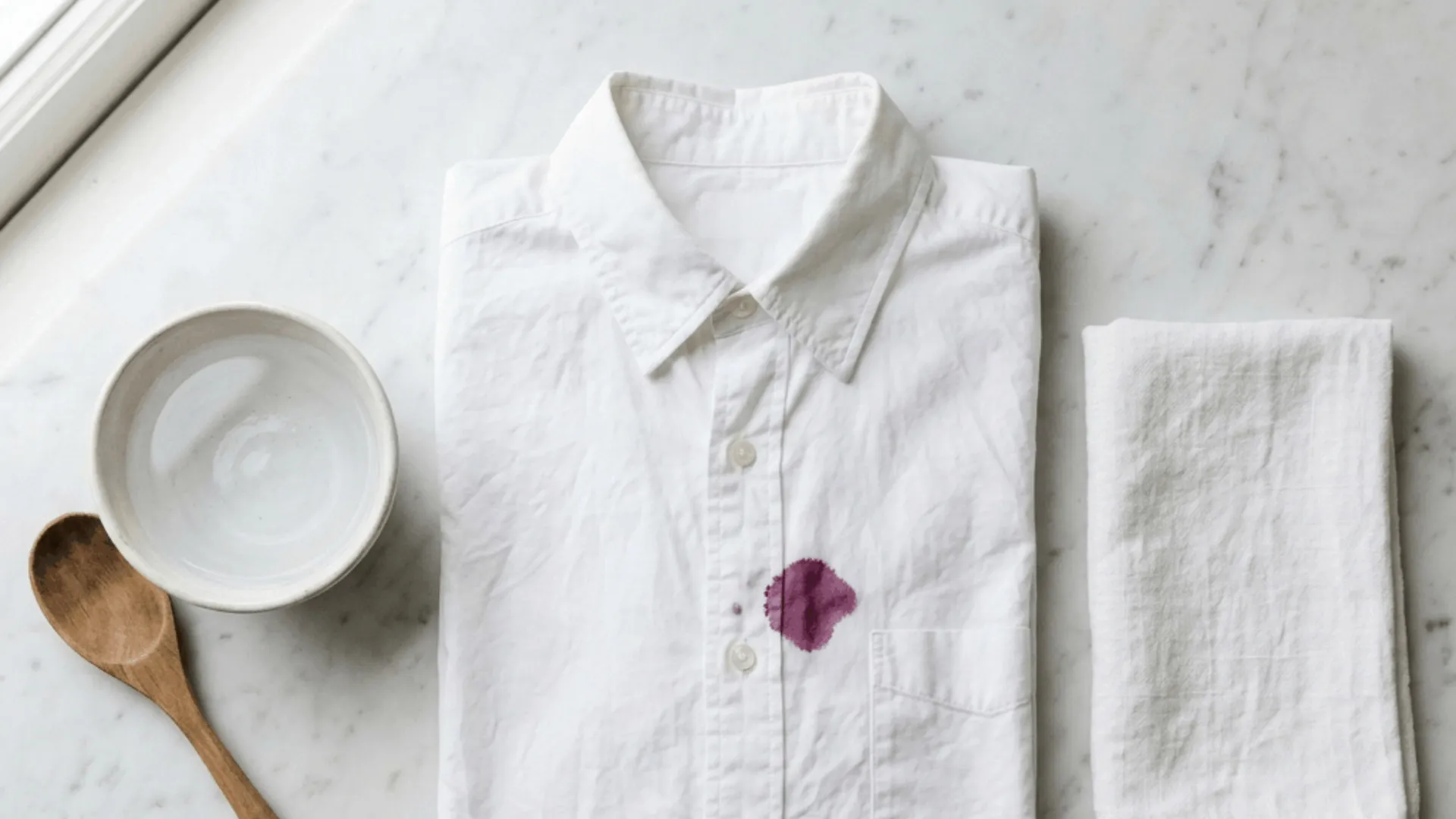
Immediate stain response: Acting quickly when something is spilled prevents the stain from setting. For liquid spills, blot — do not rub — with a clean white cloth to absorb the excess. Cold water dilution works for water-soluble marks on appropriate fibres; it is not suitable for oil-based or organic stains.
Protection from direct sunlight: Long-term direct sun exposure fades wool rug colours. Using curtains or blinds in sun-facing rooms protects the rug's colour over time.
Rug underlay: A quality rug pad beneath the rug prevents slipping and allows air circulation on the underside. Airflow beneath the rug reduces moisture build-up and lowers the risk of mould.
Shoes-off policy: Sand, grit, and chemical residues brought in from outside on shoe soles damage wool fibres over time. A shoes-off household, or a mat at the entrance, meaningfully reduces the external soiling brought onto the rug.
Preventing furniture marks: Placing furniture pads beneath heavy furniture legs prevents permanent compression marks in the wool pile. These marks cannot be removed by washing — prevention is the only solution.
Seasonal Care and Storage
For wool rugs used seasonally or stored for extended periods, pre-storage care is critically important.
Always clean before storing: A wool rug stored while dirty creates an ideal environment for moths and insects in a closed space. Wool is a natural fibre and is particularly vulnerable to moth larvae. Professional washing before storage largely eliminates this risk.
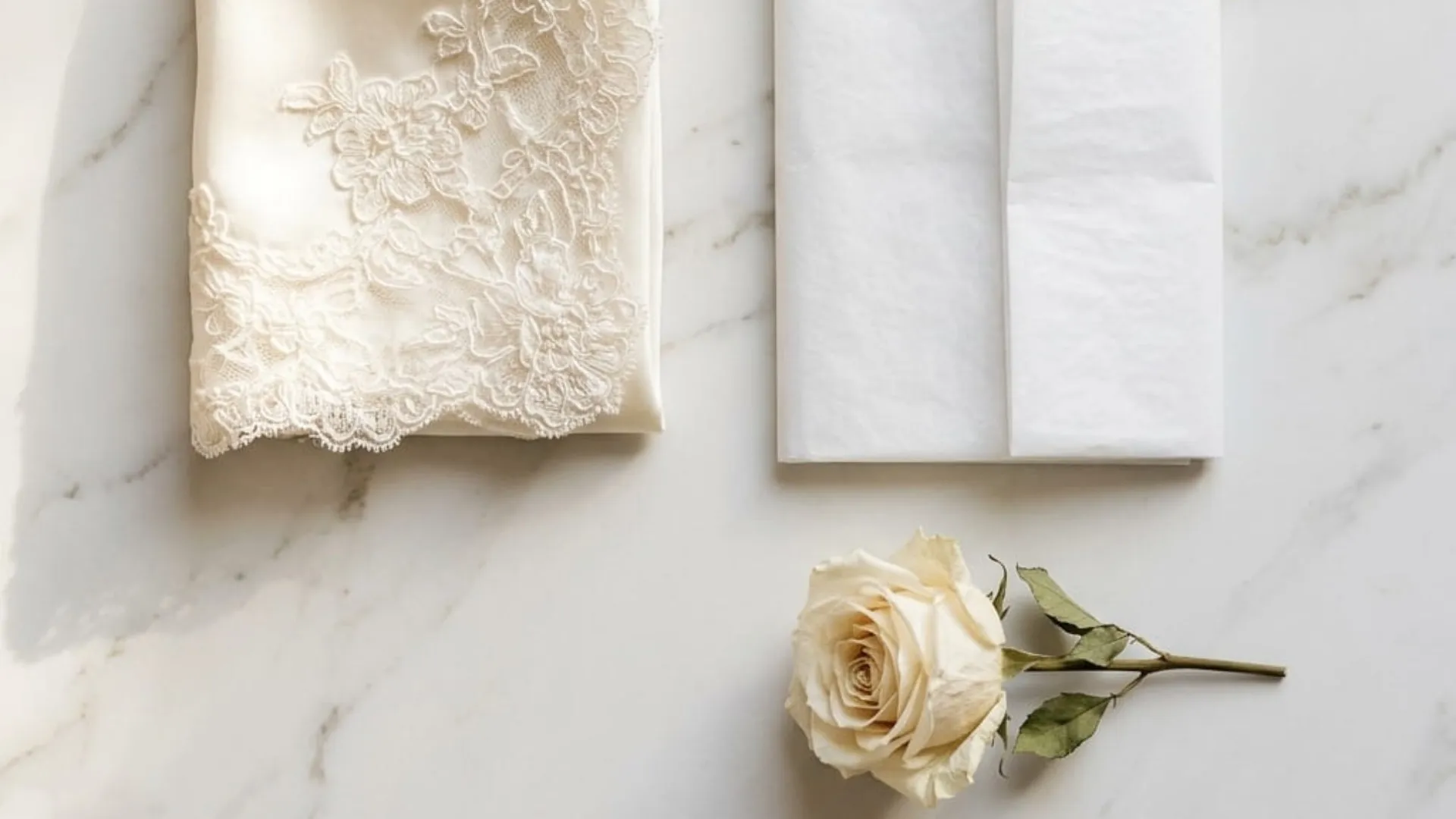
Correct rolling and packaging: A clean rug should be rolled — not folded — and wrapped in a breathable cloth or paper. Plastic wrapping traps moisture and must never be used.
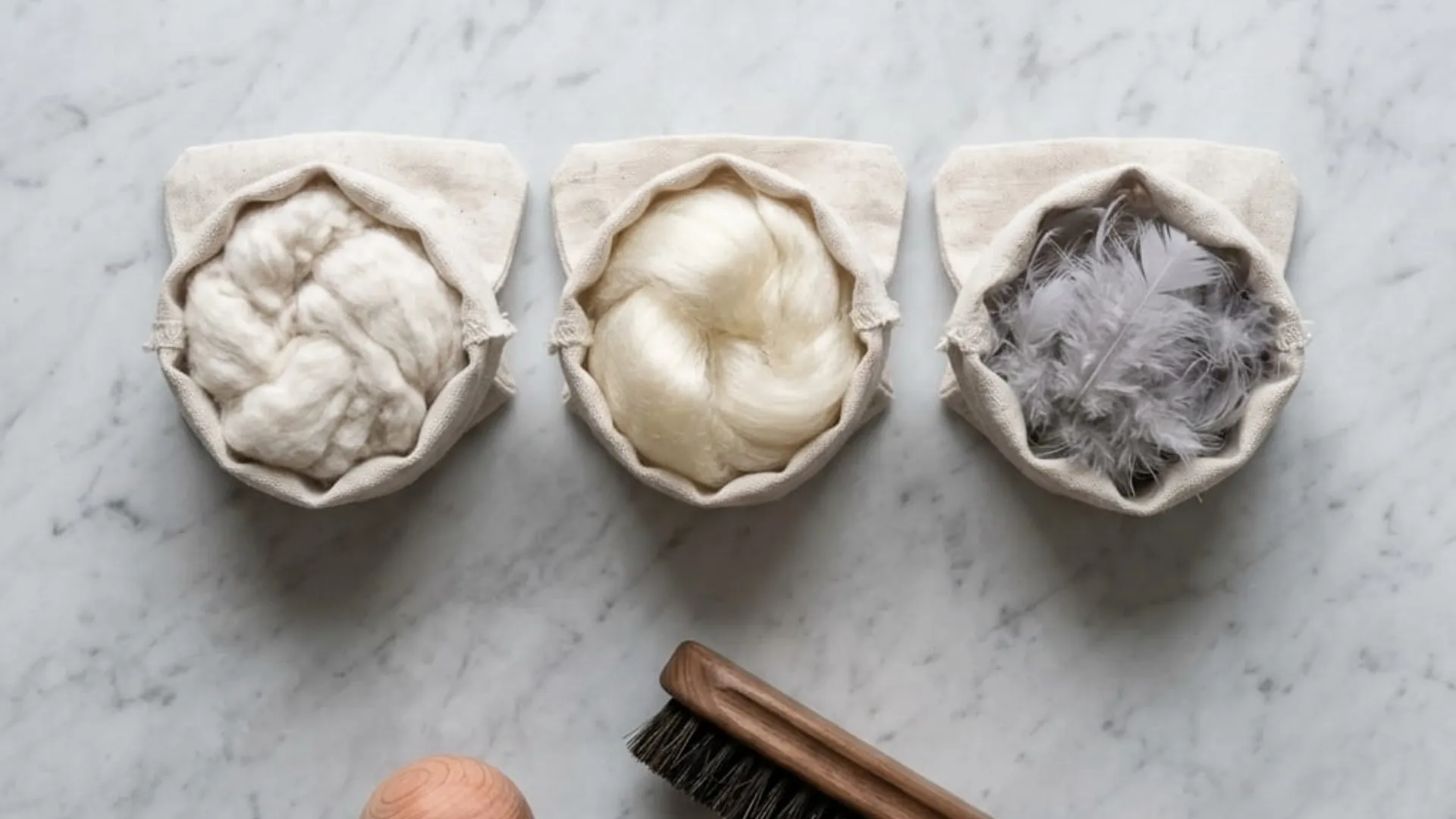
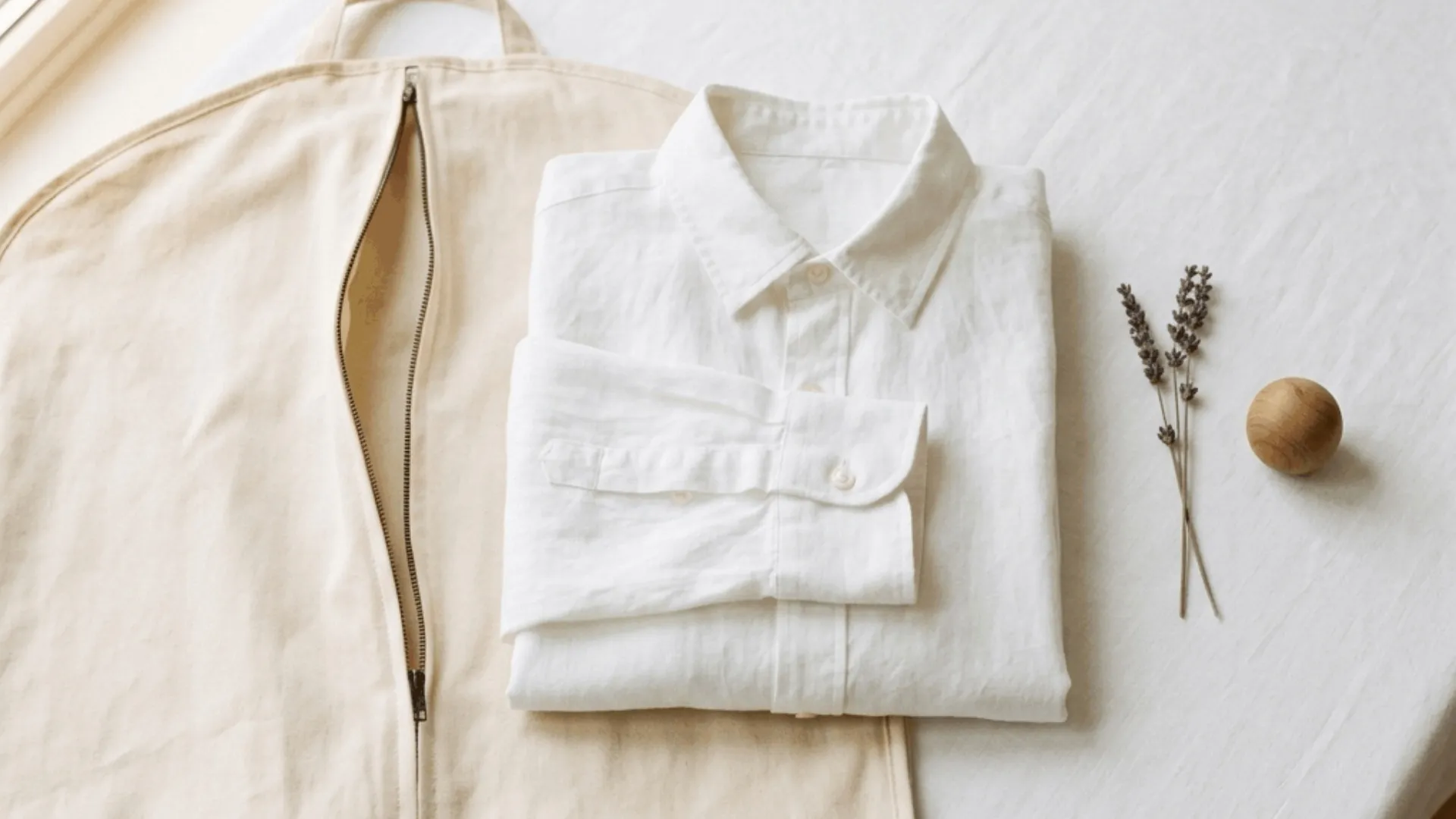
Moth prevention: Cedar balls or lavender sachets placed with stored wool rugs provide natural moth protection. Chemical moth repellents are not recommended — their strong odour can penetrate the fibres and is difficult to remove.
Storage environment: A cool, dry, dark space is ideal. High-humidity areas such as basements and spaces near water sources are not suitable for wool rug storage.
Regular checks: Rugs stored for long periods should be opened and inspected every few months. Any sign of moisture, mould, or insect activity should be addressed immediately.
Dry Anka: Professional Wool Rug Washing Across Istanbul's Anatolian Side
If you live in Kadıköy, Çekmeköy, Tuzla, Küçükyalı, or Fikirtepe, Dry Anka offers professional wool rug washing for hand-woven, machine-made, and kilim rugs — with door-to-door collection and delivery.
Once you book an appointment, your rug is collected from your address at the agreed time. At collection, the fibre type, colour condition, and existing stains are assessed and the appropriate washing method is confirmed. Washing, rinsing, and drying all take place in a controlled environment. Before delivery, the rug undergoes a final quality check and is carefully packaged for return.
Conclusion: The Right Decision for Your Wool Rug
The short answer to whether a wool rug can be washed at home is this: small, machine-made rugs with a care label that permits home washing can be carefully washed at home. For hand-woven, antique, large-format, or heavily soiled rugs, professional care is always the right choice.
Three questions are sufficient to guide the decision. Is your rug hand-woven or antique? Is it large in format? Did the colour test produce any bleeding? If you answered yes to any of these, professional washing is both the safer and the more economical choice over the long term.
A wool rug, cared for correctly, is an investment that can last for generations. Protecting that investment starts with making the right washing decision.